
Identifikasi fisik dominan atlet renang melalui program tes parameter di PRSI Kabupaten Tulungagung
DOI:
https://doi.org/10.17977/um075v1i22021p189-197Keywords:
kondisi fisik, atlet, renangAbstract
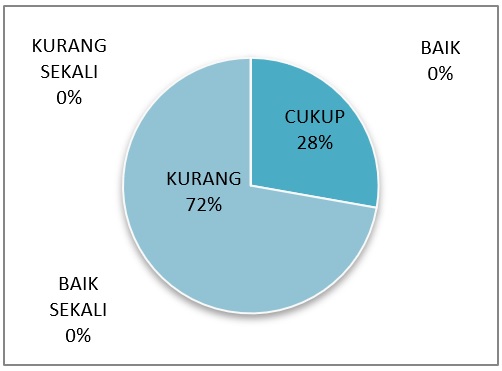
Pada olahraga renang ada beberapa komponen kondisi fisik dominan yang harus diketahui, sedangkan mitra belum memiliki data kondisi fisik dominan atlet yang dibina kususnya atlet renang dalam persiapan menuju event Porprov 2022. Tujuan pada kegiatan pengabdian masyarakat yakni melakukan analisa kondisi fisik dominan atlet renang. Metode yang digunakan pada kegiatan pengabdian masyarakat yakni tes kondisi fisik atlet renang, intrumen tes yang digunkana terdapat 10 komponen item tes, data dianalisis menggunakan rata-rata dan persentase. Hasil kegiatan pengabdian masyarakat analisis kondisi fisik atlet putra dan putri yang dipersiapkan untuk event Porprov 2022 menujukkan bahwa 72% atlet memiliki kemampuan kurang, 28% cukup, sedangkan kurang sekali, baik dan baik sekali masing-masing meliliki persentase 0%. Dengan demikian dapat disimpulkan bahwa kondisi fisik atlet putra dan putri yang dipersiapkan untuk event Porprov 2022 memiliki kemampuan kondisi fisik kurang.
References
Barbosa, T. M., Keskinen, K., Fernandes, R., Colaço, P., Lima, A., & Vilas-Boas, J. (2005). Energy cost and intracyclic variation of the velocity of the centre of mass in butterfly stroke. European journal of applied physiology, 93(5), 519-523.
de Mello Vitor, F., & Böhme, M. T. S. (2010). Performance of young male swimmers in the 100-meters front crawl. Pediatric exercise science, 22(2), 278-287.
Jäger, R., Kerksick, C. M., Campbell, B. I., Cribb, P. J., Wells, S. D., Skwiat, T. M., . . . Arent, S. M. (2017). International society of sports nutrition position stand: protein and exercise. Journal of the International Society of Sports Nutrition, 14(1), 1-25.
Kibler, W. B., Press, J., & Sciascia, A. (2006). The role of core stability in athletic function. Sports medicine, 36(3), 189-198.
Lloyd, A. B., Lubans, D. R., Plotnikoff, R. C., Collins, C. E., & Morgan, P. J. (2014). Maternal and paternal parenting practices and their influence on children's adiposity, screen-time, diet and physical activity. Appetite, 79, 149-157.
Moghaddam, G. K., & Lowe, C. R. (2019). Physical activity Health and Wellness Measurement Approaches for Mobile Healthcare (pp. 13-49): Springer.
Patil, D., Salian, S. C., & Yardi, S. (2014). The effect of core strengthening on performance of young competitive swimmers. International Journal of Science and Research, 3(6), 2470-2477.
Strzala, M., & Tyka, A. (2009). Physical endurance, somatic indices and swimming technique parameters as determinants of front crawl swimming speed at short distances in young swimmers. Medicina Sportiva, 13(2), 99-107.
West, D. J., Owen, N. J., Cunningham, D. J., Cook, C. J., & Kilduff, L. P. (2011). Strength and power predictors of swimming starts in international sprint swimmers. The Journal of Strength & Conditioning Research, 25(4), 950-955.
Zaina, F., Donzelli, S., Lusini, M., Minnella, S., & Negrini, S. (2015). Swimming and spinal deformities: a cross-sectional study. The Journal of pediatrics, 166(1), 163-167.
Downloads
Published
How to Cite
Issue
Section
License
Copyright (c) 2021 Budiman Agung Pratama, Setyo Harmono, Sulistiono, Wasis Himawanto, Atrup, Surawan

This work is licensed under a Creative Commons Attribution-ShareAlike 4.0 International License.


